Subscribe to Newsletter
 Donate
 Shop
Shop 0
0







Submitted by Reef Check Malaysia
Across Malaysia, Reef Check’s conservation teams and community partners continue to make meaningful progress in protecting and restoring coral reef ecosystems. From removing tons of harmful marine debris and repurposing waste materials for reef rehabilitation, to strengthening local conservation capacity through diver training and confronting the ongoing threat of destructive fishing practices, these efforts demonstrate the power of community-driven action. Together with government agencies, local conservation groups, volunteers, and island communities, Reef Check Malaysia is building healthier, more resilient reefs while empowering people to play an active role in safeguarding the marine environment for future generations.
MARINE DEBRIS CLEAN-UP
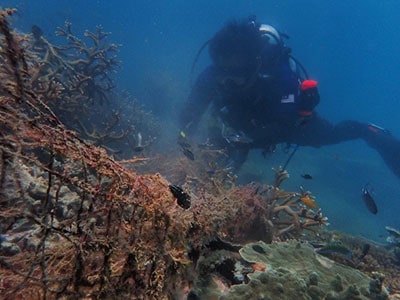
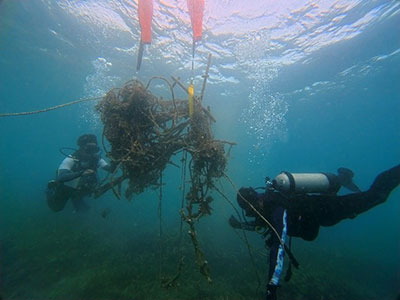
Marine debris poses a significant threat to coral reef ecosystems, impacting marine life and damaging important reef habitats. From April to June 2026, 19 underwater clean-up activities were successfully conducted across eight islands in Mersing, Johor. These efforts resulted in the removal of 554 kg of ghost nets and marine debris from coral reef areas through close collaboration with the Department of Fisheries Malaysia, members of the Mersing Marine Conservation Group, and the Tioman Marine Conservation Group.
Meanwhile, 2,000 kg of ghost nets were retrieved from the waters of Pulau Soyak, near Tioman Island. This was done through a collaborative effort with dedicated divers from a few dive centres as well as assistance from the Department of Fisheries Malaysia, who ensured the safe disposal of the recovered nets.
The continued commitment and cooperation of our partners and local conservation groups play an important role in protecting coral reef ecosystems. By removing harmful debris from reef habitats, these efforts contribute to the long-term health and resilience of the marine environment for future generations.
FROM BOTTLES TO REEFS
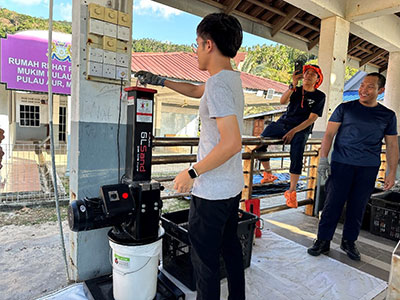
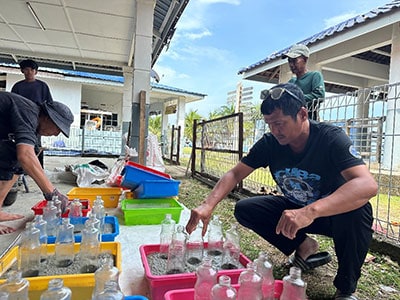
In Pulau Aur, Johor, we are helping local communities see waste in a new way. Through a recent Community Education and Public Awareness (CEPA) programme, 28 community members participated in hands-on training to learn how discarded glass bottles can be transformed into a valuable resource for marine conservation.
Participants were introduced to a glass crusher machine and learned how used glass bottles can be cleaned, crushed, and repurposed as an alternative material for coral rehabilitation structures. Beyond demonstrating a practical recycling solution, the programme helped raise awareness about responsible waste management and encouraged greater community involvement in protecting the island’s marine environment.
The learning did not stop in the classroom. Together with volunteers from the Mersing Marine Conservation Group (MMCG), community members also took part in preparing recycled glass bottles for use in reef rehabilitation efforts. These materials will be incorporated into structures designed to support coral growth and habitat recovery in damaged reef areas around Mersing.
By turning waste into a resource, this initiative is addressing two challenges at once: reducing glass waste on the island while supporting the restoration of coral reef ecosystems. More importantly, it is empowering local communities with the knowledge and skills to take an active role in conservation, creating lasting benefits for both people and nature.

IMPACTS OF FISH BOMBING
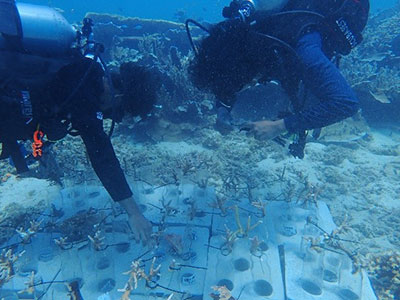
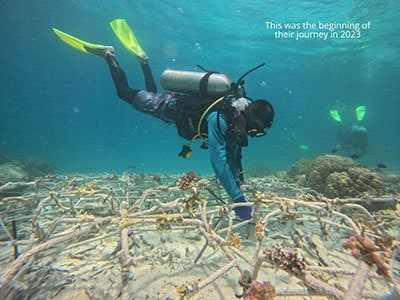
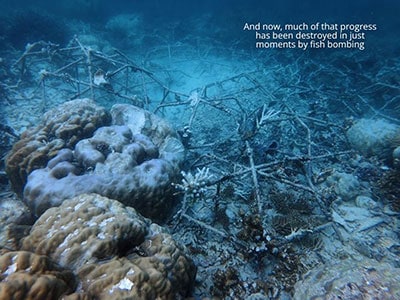
In mid-May, we discovered something heartbreaking at our Selakan rehabilitation site in Selakan Island, Sabah. Two fish bomb craters destroyed at least 10 reef stars and the corals that have been growing on them for the past two years. Based on the craters and coral fragments found around the site, it is believed that the incident happened a few days prior to discovery, either early in the morning or during sunset.
The Selakan Marine Conservation Group’s (SMCG) Manager, Ulas Musedi, expressed his sadness at seeing the corals that they had planted and cared for over the past two years destroyed in the blink of an eye. Even though the SMCG has been regularly patrolling the area, these fish bombers still managed to find a way.
Reef Check Malaysia has urged everyone to report fish bombing activities to the relevant authorities if anyone witnesses them. We’ve also encouraged the public to stop supporting this activity by avoiding the purchase of fish known to be obtained through fish bombing.
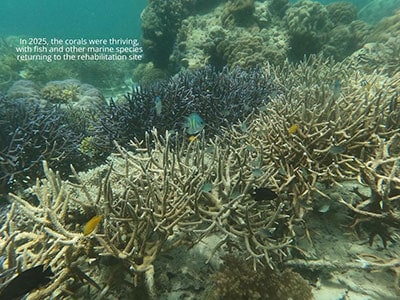
Watching our reefs recover takes years, but destruction can happen in an instant. Our reefs need all of us to protect them.

SKILLS TRAINING FOR COMMUNITY MARINE CONSERVATION GROUPS
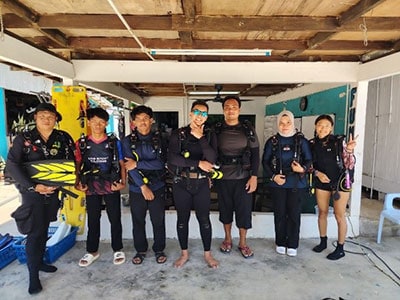
Strong community involvement remains essential for the long-term success of marine conservation efforts in the Mersing Islands. By investing in local skills and knowledge, we are helping to build a network of community members who can actively contribute to the protection and management of their marine environment.
Two series of Open Water Diver (OWD) Courses were successfully conducted throughout April, involving 10 members of the Mersing Marine Conservation Group (MMCG). The courses were held in two islands as part of efforts to strengthen local community capacity in marine conservation activities and resource management in the Mersing islands.
Through the course, participants were introduced to basic scuba diving skills including diving theory, equipment handling, safety procedures and practical in-water training sessions. The programme provided MMCG members with the opportunity to build their confidence and enhance their capabilities in supporting future marine conservation initiatives with us in the islands.
NEW REPORTS ON REEF CHECK MALAYSIA’S WEBSITE
We’ve also released several new reports:
Reef Check Malaysia’s 2025 Annual Report
Status of Coral Reefs in Malaysia 2025
Community Based Marine Conservation – CMCG Annual Summary 2025