Subscribe to Newsletter
 Donate
 Shop
Shop 0
0







Authors: Jessica Pantoja, Julio Lorda, Rodrigo Beas, Arturo Hernández-Velasco, Alfonso Romero Castro, Alesa Flores
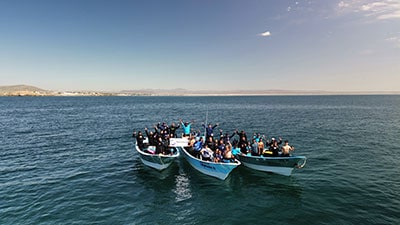
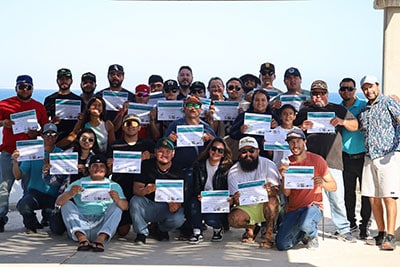
Our family of monitor divers is growing. In March, two more fishing cooperatives were trained to monitor kelp forests. This was made possible by the collaboration between COBI (Comunidad y Biodiversidad, A.C.) and Reef Check Baja. Reef Check was invited by COBI to teach local fishers how to monitor kelp forests in Bahía Asunción and Bahía Tortugas, remote coastal communities in Baja California Sur.
The fishing cooperatives, Emancipación Cooperative (Bahía Tortugas) and California de San Ignacio Cooperative (Bahía Asunción), are key stewards of their ecosystems, holding exclusive fishing rights in their territories. Established over 40 years ago, California de San Ignacio is one of the earliest examples of community-based fisheries management in the region. COBI and Reef Check joined for this opportunity to promote capacity building and foster monitoring initiatives by bringing these cooperatives together to enhance their collaborative efforts. Reef Check is proud to once again be partnering with COBI. Since 2007, Reef Check and COBI have worked on projects in Loreto, Isla Natividad, Bahia Magdalena, and El Rosario.
Throughout the training, we engaged with 30 participants. We had 15 divers (3 women and 12 men) and 15 snorkelers (2 women and 13 men). A significant number of these individuals belong to a younger generation of fishers from 14-25 years old. This group is starting to incorporate diving into their professional activities, thereby upholding and advancing a rich local tradition that has been passed down through their families.
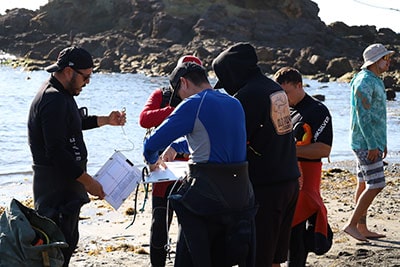
Together, we trained in Reef Check methodologies, including species identification, size measurements, density estimation for surveys of fish, algae, and invertebrates, as well as habitat characterization. On the final day, we also focused on monitoring key commercial species such as abalone, following COBI protocols. Additionally, participants received safety training focused on underwater monitoring, including the proper use of emergency oxygen for diving accidents.
Snorkelers actively participated in the theory lessons and supported fieldwork from the surface. Their curiosity, commitment, and motivation reflects an important step toward future diving certification and continued involvement in monitoring efforts.
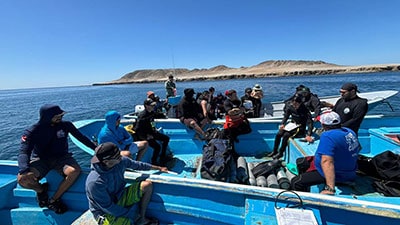
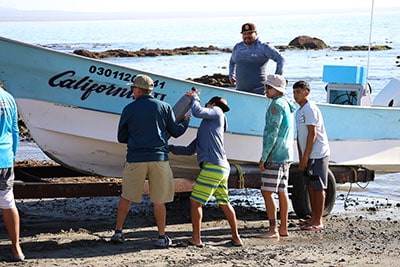
This work was made possible through strong collaboration. COBI provided transportation and essential scuba equipment and materials, while the cooperatives contributed boats, tanks, compressors, and invaluable local knowledge. Reef Check Baja’s participation brought significant support from its consortium with UABC (Autonomous University of Baja California) and ECOCIMATI, A.C. (Ecology, Sky, Sea & Land), enhancing the initiative.
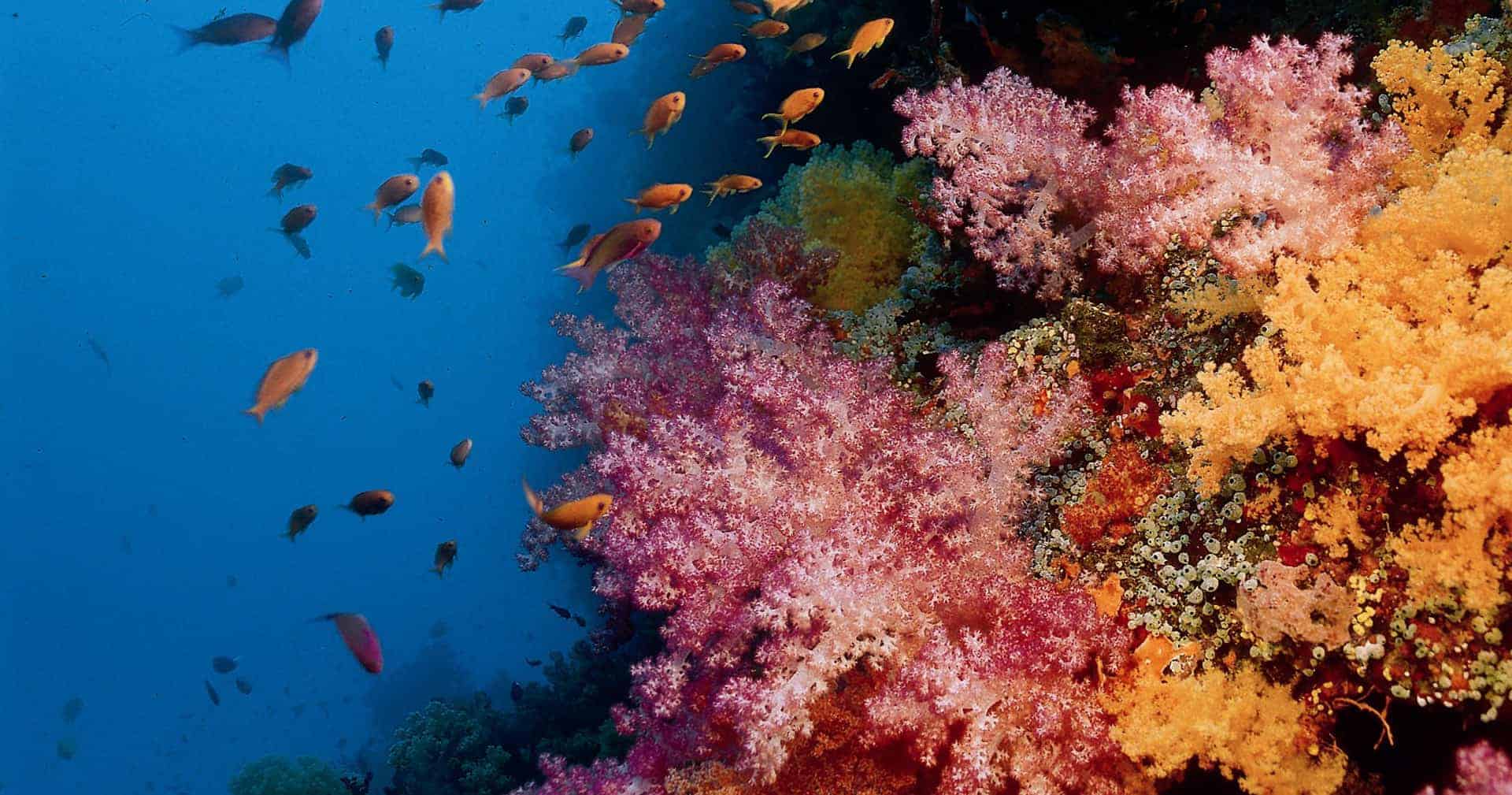
This initiative represents a step toward strengthening community-based monitoring networks. By collaborating with fishers who have strong ties to their environment, often from multi-generational fishing families, we are fostering a long-term monitoring network that combines scientific research with local knowledge. This effort aims to enhance local skills and promote the future of Baja California’s kelp forest ecosystems.
These training sessions in underwater monitoring techniques are more than just a tool for sharing knowledge with local partners, they empower them to actively generate data. By contributing to citizen science, they join an existing network of divers in the North Pacific region, where FEDECOOP (Regional Federation of Fishing Cooperative Societies of Baja California) cooperatives are now committed to understanding their fishery resources to make decisions based on data and science generated by the community itself.
“Knowledge is invaluable, and we must learn to appreciate it. Today we are here, and tomorrow we will be able to take all this knowledge back to our community. We will be able to value, grow, and improve the ecosystems we have. Today, we took a very big step.” — Alexis Bojorquez
We extend our heartfelt gratitude to our collaborators COBI, ECOCIMATI and MEXCAL (Managing Ecosystems Across the Californias), whose generous financial support for the Reef Check Baja program was instrumental in making this work possible.