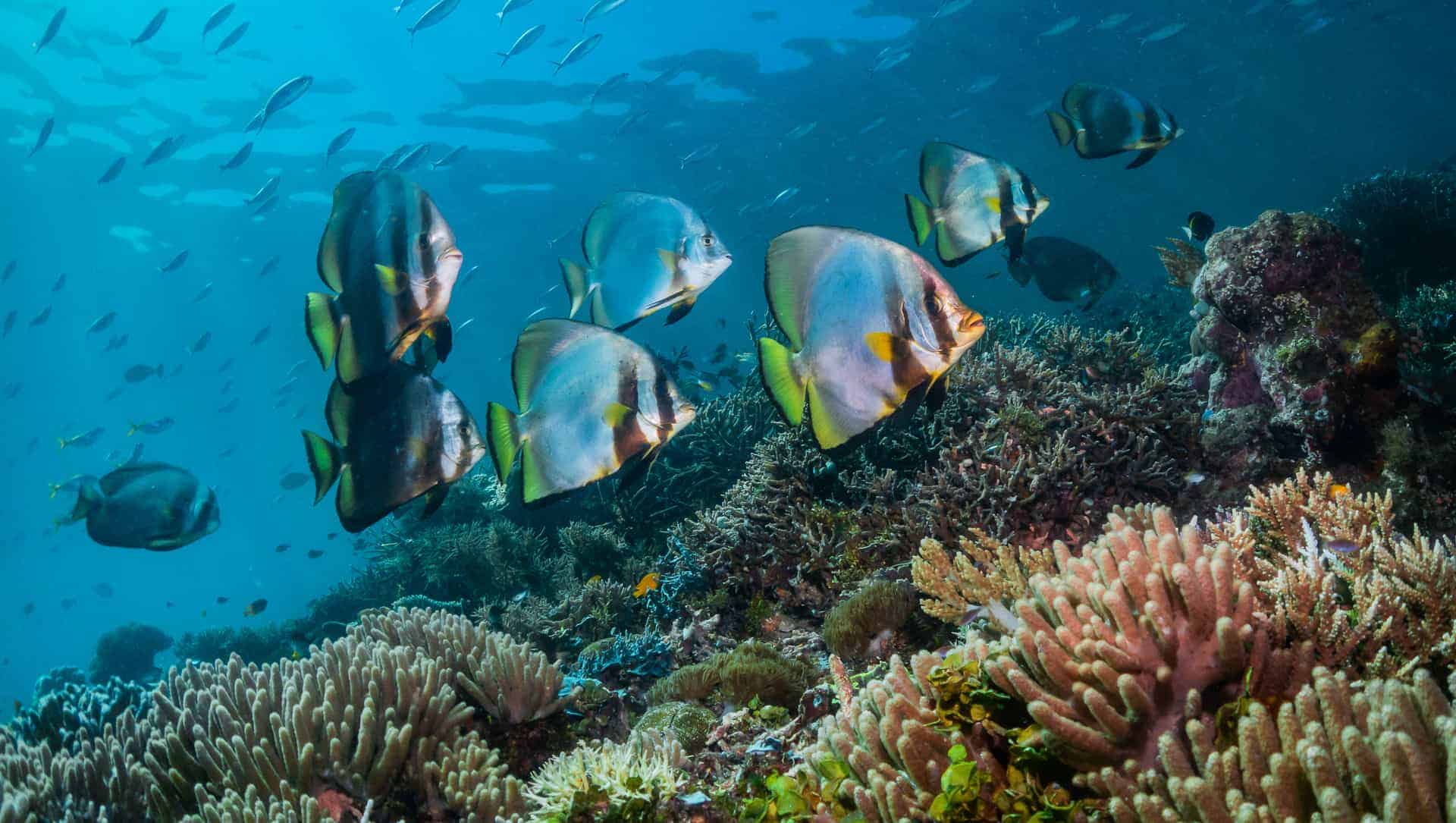
Snorkel and dive Thailand’s amazing coral reefs to conserve biodiversity. Thailand’s coral reefs are some of the most magnificent and diverse on Earth. Like many of the world’s reef systems, Thailand’s reefs are facing the pressures of overfishing and destructive fishing practices, like cyanide poisoning and explosives, as well as the threats posed by global warming and coral diseases. Reef Check, a non-profit organization, has been monitoring and surveying coral reefs around the world to provide baseline data to management organizations since 1996. Dr. Georg Heiss and Kim Obermeyer, both of Reef Check, are joining forces with Earthwatch to do baseline assessments of Thailand’s resplendent coral reefs and to set up a long-term monitoring program. With this information, government agencies and local communities can effectively participate in managing and conserving these beautiful reefs and the biodiversity they support.

For more information about the Thailand EcoExpedition and how to sign up, please visit:
http://www.earthwatchexpeditions.org/US/exped/heiss.html#top

There are 8 expeditions scheduled for 2008- book your spot today!

Biosphere Expeditions promotes sustainable conservation of the planet’s wildlife by involving the public in real hands-on wildlife research and conservation expeditions alongside scientists who are at the forefront of conservation work. In Honduras, Biosphere Expeditions is surveying the coral reefs of the Cayos Cochinos marine protected area, in the Bay Island Archipelago in the Caribbean Sea, and will be employing the Reef Check survey protocols and adding the data to Reef Check’s global database.

Expedition members must be at least PADI Open Water (or equivalent) scuba certified to take part in this expedition but will be trained in diving and survey techniques. Additional training for Reef Check certification is available for those keen on seizing the opportunity in this great locale. The base is the well-equipped Honduras Coral Reef Foundation scientific station on a small coral cay island accessible only to research personnel; accommodation is in comfortable, spacious wooden bungalow cabins by the beach with a lounge, toilets and showers.

The Cayos Cochinos form part of the world’s second largest barrier reef system, known as the Meso-American Barrier Reef, and have been identified as one of the key sections of the barrier reef system to preserve. Data from this survey will be compared to that of other parts of the Meso-American Barrier Reef System and to reefs worldwide. For more information contact Erin McCloskey at northamerica@biosphere-expeditions.org or call toll free (800) 407-5761. See www.biosphere-expeditions.org/honduras for more details.

Special offer for Reef Check members!

Expedition cost: $2250 $1990

Biosphere Expeditions promotes sustainable conservation of the planet’s wildlife by involving the public in real hands-on wildlife research and conservation expeditions alongside scientists who are at the forefront of conservation work. In Honduras, Biosphere Expeditions is surveying the coral reefs of the Cayos Cochinos marine protected area, in the Bay Island Archipelago in the Caribbean Sea, and will be employing the Reef Check survey protocols and adding the data to Reef Check’s global database.

Expedition members must be at least PADI Open Water (or equivalent) scuba certified to take part in this expedition but will be trained in diving and survey techniques. Additional training for Reef Check certification is available for those keen on seizing the opportunity in this great locale. The base is the well-equipped Honduras Coral Reef Foundation scientific station on a small coral cay island accessible only to research personnel; accommodation is in comfortable, spacious wooden bungalow cabins by the beach with a lounge, toilets and showers.

The Cayos Cochinos form part of the world’s second largest barrier reef system, known as the Meso-American Barrier Reef, and have been identified as one of the key sections of the barrier reef system to preserve. Data from this survey will be compared to that of other parts of the Meso-American Barrier Reef System and to reefs worldwide. For more information contact Erin McCloskey at northamerica@biosphere-expeditions.org or call toll free (800) 407-5761. See www.biosphere-expeditions.org/honduras for more details.

Special offer to Reef Check members!

Expedition cost: $2250 $1990

Maldives Scuba Tours has been working with the Marine Conservation Society (MCS) to carry out liveaboard Reef Check surveys since 2005. They carry out two-week trips in the central atolls of the Maldives twice a year, where the dive guides and boat crew are joined by a Reef Check Team Leader from the UK sent by MCS.

The trip encompasses Reef Check training and at least two sites are surveyed for Reef Check per year. In January and June/July 2005, the trip also used the International Society of Coral Reefs post-tsunami survey technique to record damage to the Maldives reefs, and set up permanent monitoring stations. Survey dives in 2005 recorded little damage from the tsunami, however, many of the inner reefs appear to still be struggling to fully recover from bleaching damage in 1998. The fish populations appear healthy with a large abundance of coral trout, snapper and parrotfish. Manta rays and whale sharks are also recorded on these trips.

The next survey trip is in January 2007, and the following one (with spaces available) will be from July 28th to August 10th 2007. You can book now at: http://www.scubascuba.com/
Visit www.mcsuk.org/mcsaction/diverspages/coral+reef+surveys+with+mcs for more information

This new program with TUI continues in August at Robinson Club, Soma Bay, Egypt. A Reef Check Scientist will be on hand to teach guests and staff about coral reefs and Reef Check. Divers can also participate in the monitoring process.Link: TUI website 

This EcoAction Training course is intended for divemasters, instructors, researchers, etc who are interested in learning how to sell our EcoAction program. This course will be led by Georg Heiss in Germany. Please email Georg Heiss for more information.