Submitted by Reef Check Malaysia

Spring has signaled the beginning of Reef Check Malaysia’s 2024 survey season. With annual surveys scheduled at over 200 sites across the country, EcoDiver monitoring teams have a lot of work ahead of them! In addition to EcoDiver training, RCM has also held dive courses for local communities, getting them poised to join future surveys and activities. Tackling destructive ghost nets, rolling out a new waste management program and monitoring coral bleaching as it happens have also been priorities these past few months.

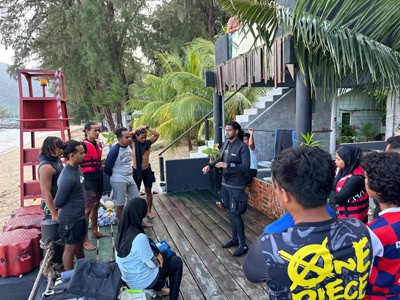
EcoDiver training with divers from the two villages (Kudat)

Skills Training Courses for Local Stakeholders

Reef Check Malaysia conducts annual surveys at more than 200 sites across the country. Our EcoDivers are volunteer divers, and we’re glad to have the local community we work with showing interest and coming on board with our efforts. Our survey data is published as a report every year, made available on our website.

Our team has been actively training and organizing training sessions for various stakeholders, equipping them with new dive-related skills.

In the Mersing group of islands, we recently organized an Open Water Dive course for six representatives from the local community. All are now certified SCUBA divers, bringing the total of local divers to 10! These islanders will now be able to gear up for advanced training in marine conservation and rehabilitation efforts, such as getting certified as Reef Check EcoDivers.

An activity during the Coral Bleaching Monitoring Training

Besides the Open Water Dive course, our colleagues from RCM conducted an EcoDiver Training with the local communities from Kg. Tajau Laut and Kg. Malubang, Kudat. Organized by Sabah Parks, this training aimed to empower divers from the two villages to participate in reef conservation efforts and monitor the health of their marine ecosystems. We’ve conducted similar training for other local community members from other islands, and these representatives were able to join us for activities such as reef rehabilitation and Reef Check surveys. Our team also completed the EcoDiver training course with nine Sabah Parks staff, who are based at several marine parks around Sabah.

RCM also carried out a Coral Bleaching Monitoring Training with representatives from Sabah Parks, as well as the Borneo Marine Research Institute (BMRI) from Universiti Malaysia Sabah. This training was held in response to the NOAA Coral Reef Watch Satellite Bleaching Alert. Sessions included a detailed look at bleaching, as well as understanding the coral bleaching watch protocol used to monitor coral reefs affected by rising water temperature.

Tackling Ghost Nets

Ghost nets removed by RMCG

Ghost nets contribute to ocean pollution by causing extensive social, economic and environmental impacts. They trap and entangle marine life, besides smothering and damaging important ecosystems such as coral reefs and seagrass beds.

Reef Check Malaysia’s teams on the islands have been receiving reports of ghost nets, and have been working hard to remove them from the marine environment before they cause extensive damage. In just the first quarter of 2024, our local group on Redang Island, the Redang Marine Conservation Group (RMCG), successfully removed approximately 140 kg of ghost nets, all found near the village jetty! The nets collected were given to the local youth of the island, who planned to recycle them into football goalpost nets.

There has been limited data on ghost nets in Malaysia, specifically from Tioman Island. RCM began training the local Tioman islanders in 2015 to locate and remove ghost nets from any reefs and beaches around the island. We also helped set up a reporting hotline to gather information about ghost nets. From 2016 until 2022, we recorded a retrieval of 145 ghost nets, weighing more than 21 tonnes (21,000 kg) from around Tioman Island alone. Today, most of the retrieval work on the island is done by the Tioman Marine Conservation Group (TMCG), with the help of volunteers from local dive shops.

Due to the extensive work done on ghost nets, our colleagues on Tioman Island and a member of TMCG recently published a paper titled “Incidence of ghost nets in the Tioman Island Marine Park of Malaysia”. It details the amount of nets collected, where and when they were found, and offers recommendations to help deal with this issue.

Tioman stakeholders working together to remove ghost nets
Collected ghost nets on a beach in Tioman

Rolling out a New Waste Management & Recycling Program in Mersing

In the last few months, our waste management and recycling programs have been progressing well in Mantanani and Mersing Islands. In Mantanani, we began a trial on composting, which is now slowly being adopted by the local community.

Meanwhile, consultation activities with the communities of Pulau Aur and Pulau Pemanggil in Mersing have determined that most of the island residents support starting a community recycling program on their island, similar to the recycling program that has been conducted on Pulau Sibu and Pulau Tinggi for the past two years.

Islanders of Aur and Pemanggil Islands gather to discuss the community recycling program

Waste management is a challenge faced by many communities in the Mersing islands. Unlike the mainland, solid waste on the islands is managed by individual households themselves. The community recycling program is a simple yet effective initiative to reduce the impact of waste on the environment, contributing to the preservation of the island’s marine ecosystem.

Local community in Sibu Island segregating collected recyclable materials
Transferring recyclable materials to mainland Mersing

Coral Reefs Surveys in Malaysia

A diver conducting a Reef Check survey

Our colleagues here at RCM have begun conducting Reef Check surveys around the country, with several sites in Tioman, Redang, Mersing, Sabah and Sarawak already completed. These surveys are usually led by RCM staff, with assistance from volunteer EcoDivers, or volunteers from other NGOs or government partners.

Aside from the Reef Check surveys, our team has also been actively monitoring coral bleaching. In Malaysia, we are experiencing what is now accepted as the 4th global coral bleaching event. Our surveys over the recent weeks show that, in some areas, over 80% of corals are bleaching. The normal recorded water temperature off the East Coast of Malaysia stands at 28-29˚C, which has increased to 32˚C in the last few days. This temperature is alarming, as it is beyond the temperature corals start bleaching (which is approximately about 30˚C).

There is little we can do on a local level, but we are doing what we can. Bleached coral reefs are vulnerable to attack by predators including the crown of thorns starfish (COTs) and drupella snails – both are corallivores, eating corals. Our field teams are doing their best to identify sites worst affected by these corallivores and will try to remove them where possible. If you go diving in Malaysia, please help us by letting us know (email us at hello@reefcheck.org.my) if you see a site with either COTs or drupella. You can also report coral bleaching to us by scanning the QR code below.

Reef Check Italia’s expedition to Bangka Island

Submitted by Jia Cashon

Reef Check Italia’s expedition to Bangka Island, North Sulawesi, Indonesia is a must for divers interested in beginning their journey in scientific diving and coral monitoring. This course, set in a stunning location with some of the best diving I have ever experienced, teaches some of the most commonly used scuba monitoring techniques worldwide. We learned how to assess benthic invertebrates, fish populations, and conduct CoralWatch bleaching surveys. Additionally, we were taught how to interpret data and identify trends over the years.

Before the Course

If you can arrive in Manado early, there are a variety of activities you can enjoy. On land, many visitors explore Tangkoko National Park, which is renowned for its rich biodiversity and opportunities to see unique wildlife such as tarsiers, crested black macaques, and various endemic bird species. For underwater adventures, Bunaken Island offers a marine protected area with numerous beautiful dive sites. Located in the Indo-Pacific region, Bunaken boasts the highest marine biodiversity on earth, featuring vibrant coral reefs, an abundance of fish species, and the chance to see megafauna such as turtles and reef sharks.

Reef Check Italia’s expedition to Bangka Island

What to Expect

For beginner divers, the best preparation for this course is to practice buoyancy. I cannot stress this enough: to handle surveys and maintain the workload they require, you need to have perfect buoyancy. The reefs in North Sulawesi are teeming with life, and there are many delicate corals that protrude from the benthos. Fins should never touch the bottom so as to not break the corals. Some dives may be wall dives, but expect most to have the reef on the bottom. Familiarity with your dive computer is highly recommended. If the current is strong or if you happen to be separated from the group, you should be comfortable enough to make a safety stop and surface with an SMB on your own. Expect to have your hands always occupied and to work with the current as well.

Reef Check Italia’s expedition to Bangka Island

Record Your Memories!

Plan on bringing a camera, as identifying reef species can be overwhelming. Photographing organisms that you are curious about, or if you need to know them for the course, is the best way to identify and understand what you’re looking at. It also provides you with a record of what you saw. I brought an Olympus TG-6 and found it a great camera for underwater photography while traveling since it is small and compact. This camera takes excellent macro shots and has a built-in flash to color adjust for smaller organisms. Many people also brought GoPros for video footage as well.

Reef Check Italia’s expedition to Bangka Island

What We Spotted

We saw an incredible array of marine life, but overall, the highlights were the smaller organisms. Among the most memorable were the vibrant nudibranchs, a personal favorite of mine, as well as tiny shrimp and seahorse species, cuttlefish, peacock mantis shrimp, blue-ringed octopus, and frogfish. These encounters provided excellent opportunities for honing our photography skills as well as making every dive memorable and exciting. Each dive brought new discoveries which made the experience both educational and thrilling.

End Remarks

Reef Check Italia’s expedition to Bangka Island

Whether you’re interested in scientific diving or an experienced diver, this program will enhance your diving skills and understanding of marine conservation. The diving in the Coral Triangle is also unparalleled to anywhere else on this planet. Participating in the Reef Check Italia course is not just about a dive holiday, but a commitment to protecting our ocean’s coral reefs through the knowledge of scientific diving- something I hope you may one day get to experience.

Stay tuned to Reef Check Italia for the announcement of 2025 course details and available scholarships.

Submitted by Misa Nisawara

survey photo from Mudjimba Island

After four months of high seas, strong winds and plenty of rain, the Reef Check Australia team eagerly set out to survey Mudjimba (Old Woman) Island, a site we visit annually and last surveyed in April 2023.

survey photo from Mudjimba Island

We were happy to discover a relatively small amount of coral bleaching at this particular Mudjimba Island site, with only 5% of the overall population bleached. However, those bleached colonies were heavily impacted, with an average of 60-70% bleaching. We also recorded a number of bleached anemones without fish. This is the first time bleached anemones have been documented at this site, illustrating the changes in the environment over time.

At Mudjimba shallow reef, a mix of hard corals, soft corals, rocky substrate and algae provides habitat for many species, from small invertebrates to larger animals. For instance, we recorded nudibranchs, a lobster, wobbegong sharks blending into the reef floor and a sea turtle feasting on algae. If devastating bleaching was to occur at a mass scale at Mudjimba Island, it would affect all these creatures who call this reef home. Sadly, we also recorded entangled fishing line and boat anchor damage on both hard and soft corals.

As a new member of Reef Check Australia, this was my in-water training day to become a scuba surveyor and a Reef Check EcoDiver. The instructor was very knowledgeable and made it a very fun experience for the whole team. I am very excited for my upcoming journey with Reef Check Australia.

survey photo from Mudjimba Island

Images: taken at Bondalem’s Locally Managed Marine Area, Bondalem Village, Bali, Indonesia by Derta Prabuning – Reef Check Indonesia

Earlier this month, NOAA and ICRI (of which Reef Check is a member) confirmed that the world is currently experiencing its fourth global coral bleaching event and its second in the last 10 years. A copy of the full press release is below.

Previous events occurred in 1998, 2010, and 2015, and Reef Check teams around the world have been able to document each event as they unfolded. This current event has been no exception; Reef Check chapters share their observations here:

Reef Check Dominican Republic
“NOAA recently declared the fourth global massive coral bleaching event, with the Dominican Republic significantly impacted. In 2023, we observed that over 90% of coral colonies bleached as water temperatures soared above 30 degrees Celsius, peaking at 32 degrees during the late summer months. Witnessing our reefs turn ghostly white was alarming. However, by winter and spring, the reefs had regained their normal hues, and temperatures settled at a new normal of 27 degrees Celsius. We are now assessing the survival and mortality of our coral populations to understand their adaptation to these conditions and to inform more effective conservation strategies.” – Ruben Torres, President

Reef Check Malaysia
“Reef Check Malaysia has been monitoring this bleaching event as it unfolded over the last few months, using data from NOAA. In February, we started planning a monitoring program, including training local teams to monitor the onset, spread, duration and impact of the bleaching event. We wanted to get better data on the impact. We are now conducting regular bleaching monitoring surveys, based on the Reef Check standard survey methodology. We have reports of up to 20% bleaching in some areas.” – Julian Hyde, CEO

Reef Check Indonesia
“This bleaching season is unique and of course, the worst has already taken place in November – December 2023. These months are known as the rainy season in Indonesia’s archipelago, but bleaching occurs. Based on network reports, in November – December, bleaching took place in Karimunjawa Island, North Sulawesi, Bali, West and East of Nusa Tenggara, Raja Ampat, and several other places in Indonesia.

Reef Check Indonesia works closely with the Ministry of Marine Affairs and Fisheries, through the Director of Ecosystem and Aquatic Biota Conservation, to provide monitoring advice to the network so that coral bleaching monitoring can be monitored effectively and efficiently.

Now, we are preparing to release the previous bleaching report (November 2023 – January 2024) and monitoring advice for a bleaching alert in the middle of 2024 (June – July). We hope that bleaching does not occur, but if it takes place, we are ready.” – Derta Prabuning, Executive Director

ICRI Press Release

NOAA and ICRI Confirm Fourth Global Coral Bleaching Event

WASHINGTON D.C (Monday 15th April 2024) – The world is currently experiencing its fourth global coral bleaching event, according to NOAA scientists and ICRI’s network of global coral reef scientists, the second in the last 10 years.

Bleaching-level heat stress, caused by prolonged increases in anomalous ocean temperatures, as remotely monitored and predicted by NOAA’s Coral Reef Watch (CRW), has – and continues to be – extensive across the Atlantic, Pacific, and Indian Oceans.

“From February 2023 to April 2024, significant coral bleaching has been documented in both the Northern and Southern Hemispheres of each major ocean basin,” said Derek Manzello, Ph.D., NOAA CRW coordinator.

Mass bleaching of coral reefs, since early 2023, has been confirmed in at least 53 countries, territories, and local economies, including Florida (U.S.A), the Caribbean, the Eastern Tropical Pacific (including Mexico, El Salvador, Costa Rica, Panama, and Colombia), Australia’s Great Barrier Reef, large areas of the South Pacific (including Fiji, Vanuatu, Tuvalu, Kiribati, and the Samoas), the Red Sea (including the Gulf of Aqaba), the Persian Gulf, and the Gulf of Aden.

Bleaching must be confirmed within each Ocean basin to make a final determination of a global bleaching event. Reports have now been confirmed of widespread bleaching across parts of the Western Indian Ocean, including Tanzania, Kenya, Mauritius, the Seychelles, Tromelin, Mayotte, and off the western coast of Indonesia.

“As the world’s oceans continue to warm, coral bleaching is becoming more frequent and severe,” Manzello said. “When these events are sufficiently severe or prolonged, they can cause coral mortality, which can negatively impact the goods and services coral reefs provide that people depend on for their livelihoods.”

Where coral bleaching results in mortality, especially on a widespread scale, it impacts economies, livelihoods, food security, and more. However, it is important to remember that coral bleaching does not always lead to coral death. Rather, if the stress driving the bleaching diminishes, corals can recover, with reefs maintaining their biodiversity and continuing to provide the ecosystem services that we rely on.

“Climate model predictions for coral reefs have been suggesting, for years, that bleaching impacts would increase in frequency and magnitude as the oceans warm,” said Jennifer Koss, director of NOAA’s Coral Reef Conservation Program (CRCP).

This global event requires global action. The International Coral Reef Initiative (ICRI), a partnership of 101 international members, currently co-chaired by NOAA and the US Department of State, is steadfast in applying resilience-based management actions for coral reefs. In response to the three previous global bleaching events as well as regional and local events, ICRI and its members have advanced coral interventions and restoration in the face of climate change. ICRI develops, and shares, best practices for the effective management of coral reefs through the implementation of its Plan of Action.

NOAA has incorporated resilience-based management practices, increasing the emphasis on coral restoration, into its 2018 strategic plan, and funded a National Academies of Sciences’ study, leading to the publication of the 2019 Interventions to Increase the Resilience of Coral Reefs.

Koss said: “We are on the frontlines of coral reef research, management, and restoration, and are actively and aggressively implementing the recommendations of the 2019 Interventions Report.”

The 2023 heatwave in Florida (U.S.A) was unprecedented; starting earlier, lasting longer, and with recorded temperatures higher than any previous event in the region. During the heat stress event, NOAA deployed the 2019 recommended interventions, building a valuable knowledge base and made significant strides, through its “Mission: Iconic Reefs program”, to offset some of the negative impacts of global climate change and local stressors on Florida’s corals including moving coral nurseries to deeper, cooler waters and deploying sunshades to protect corals in other areas.

Global bleaching events do not affect all coral reefs equally and require a suite of global, regional, and local interventions. This emphasizes the importance of regularly monitoring coral reef ecosystems and not just during bleaching events. Networks such as the Global Coral Reef Monitoring Network, an operational network of ICRI, and the US Coral Reef Task Force, provide mechanisms for reporting on the impact of bleaching on the World’s coral reefs, alongside regional bleaching observation networks.

To share key messages and resources about coral bleaching, its impacts, causes and solutions currently being implemented and developed, ICRI has developed the “Coral Bleaching Hub” to support responses, policy and planning, and encourage global cooperation.

ICRI will be hosting a webinar on Tuesday 14th May 2024 to present and discuss the status of the 4th Global Bleaching Event, and the role of the global coral reef community. Register your interest to attend the webinar here.

Submitted by Maputo Dive Center

In the heart of Mozambique, a transformative journey unfolds as aspiring marine conservationists dive into the depths of the ocean, not just to explore its wonders but to emerge as guardians of its future. Maputo Dive Center (known as “Centro de Mergulho de Maputo” in Portuguese), Mozambique’s pioneering dive center, has become a beacon of hope and empowerment, guiding individuals from diverse backgrounds on a path to scientific diving and marine conservation. Last month, they celebrated a significant milestone, with the graduation of 9 university students, including 5 from Universidade Pedagógica, 3 from Universidade Eduardo Mondlane, and 1 independent learner.

Evander Nhaule: From Ocean Enthusiast to Guardian
One such individual is Evander Nhaúle, a graduate in Languages and International Relations, who found his calling in the ocean’s embrace. “I found my vocation in diving thanks to unexpectedly seeing whales in my vicinity,” Evander shares. His journey from being an ocean enthusiast to a scientific diver is a testament to the transformative power of the Reef Check program. “I was happy when they announced the scientific diving course because I never wanted to see the ocean just as a ‘recreational tourist’ but rather with the scientific eyes that enable me to understand what I’m really seeing before me. I believe that with this course, we can take on leadership roles that support marine conservation actions and the development of the Blue Economy, which is what I propose to do.”

Esperança Bila: Nurturing a Passion for Marine Ecology and Conservation
Esperança Bila, a final-year student in Biology Teaching and Laboratory Management from Maputo’s Universidade Pedagógica, echoes this sentiment. Her motivation stems from her background in conservation biology, her involvement in seagrass research and a deep understanding of the marine ecosystem’s complexity. “The diving course has given a significant boost to my skills as a biologist,” Esperança states. Her experience in the Reef Check program has been nothing short of incredible, “Diving is a passion. During the training, I was able to acquire knowledge and scientific methodologies focused on constructing questions that should be investigated. This is the essence of the scientific journey, where generated answers can be rigorously tested and validated. In marine scientific diving, the experience transcends merely observing the captivating beauty and vastness of the underwater world. It involves systematically gathering data to address scientific inquiries.”

The Graduates’ Voyage into Marine Conservation
Both Evander and Esperança highlight the program’s impact on their personal and professional growth. For Evander, it’s about “increasing my necessary experience to gain recognition in my monitoring capabilities.” Esperança sees her future in contributing to marine biodiversity conservation, “My knowledge and experience in Biology can be useful for Marine Biodiversity Conservation.” Their journeys through underwater data collection and analysis, identification of indicator species, and an entry-level coral reef monitoring program mark the beginning of a promising career in marine conservation.

But for most of the students, this was more than just a scientific diving course. They completed a much longer journey that began years ago when they learned to swim and dive recreationally before becoming scientific divers. It is a step forward in Maputo Dive Center’s mission to develop the next generation of marine conservationists, researchers, and conservation area managers in Mozambique.

The Urgent Mission for Coral Reef Conservation in Mozambique
Looking ahead, the recent approval of the National Strategy for the Management and Conservation of Coral Reefs underscores the urgency of this mission. With over 2,500 km of coastline, Mozambique lacks research and monitoring capacity for Marine Protected Areas. Swimming, snorkeling, and diving are fundamental skills for the management and conservation of coral reefs.

This first group of graduates will be crucial in helping to achieve the goals set out in the national strategy, but this cannot be a one-time exercise. Continuous training is needed to build an adequate workforce. With this in mind, and learning from the experience of the graduates, Maputo Dive Center conceptualized the Zero to Hero Diving Program to develop local capacity for the research and monitoring of coral reefs in Mozambique.

Zero to Hero Diving Program: Scaling Scientific Diving and the Reef Check Program
The Zero to Hero Diving Program will be an annual 9 to 12-month program that takes participants with zero underwater skills and teaches them swimming, snorkeling, and diving, including scientific diving methods through the Reef Check program. It is the replication of the experience that last month’s graduates had, in a single structured course. The goal is to continue bridging the gap between education and employment, complementing university theory with the introduction of practical knowledge and skills to work comfortably and safely underwater. The goal is to develop and enhance the capacity for coral reef research and conservation within Mozambique and prepare students for careers in marine conservation.

In this regard, last month, Maputo Dive Center signed a Memorandum of Understanding with Universidade Pedagógica to continue training their students through the future Zero to Hero Diving Program. This partnership aims to replicate the success to-date and continue building a resilient marine conservation community.

We extend our sincere gratitude to Reef Check, Associação Natura Moçambique, the Italian Agency for Development Cooperation, and all individual donors for their support in funding the courses to date. We also thank Universidade Pedagógica for their participation in these trainings with their students, Maputo National Park as the guardian of the beautiful and biodiverse context in which the training was conducted, and Dr. Yara Tibiriçá for writing and teaching the scientific diving curriculum, including teaching the Reef Check curriculum. Your contributions have been fundamental in shaping the future of these graduates.

Join us in congratulating the graduates and everyone who contributed to this journey. If you are interested in supporting our mission to build the capacity of future marine conservationists, please get in touch. Let’s make the Zero to Hero Diving Program a success together!

Click here to watch the graduation video to witness the joy and hope of this program. Together, we’re diving into a brighter future for Mozambique’s marine life!

Maputo Dive Center (Centro de Mergulho de Maputo)
Instagram: @centrodemergulhodemaputo
Email: info@cmm.co.mz
Phone: +258 87 734 5333

Submitted by Reef Check Malaysia

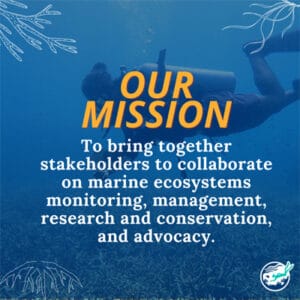
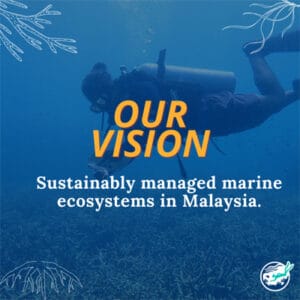
In conjunction with Earth Day, Reef Check Malaysia was thrilled to announce that after 16 years of coral reef conservation, we’re making waves with a major pivot! Introducing the evolution of Reef Check Malaysia (RCM), as we broaden our scope to protect all marine ecosystems.

RCM is now a ‘marine ecosystems conservation’ organization as we shift our focus to include seagrass and mangrove ecosystems, deepening our collective understanding of environmental interconnectedness. Here is our new mission and vision:

Our CEO, Julian Hyde, explains more about our pivot in focus here. 

Coral Bleaching

Coral bleaching occurrences have become more frequent and severe in recent decades, posing a significant threat to coral reef ecosystems around the world. The loss of coral reefs has surpassed the ecological, economic, and social consequences threshold, as coral reefs are the world’s most diverse marine ecosystems, in addition to providing coastal protection, supporting fisheries, and contributing to tourism.

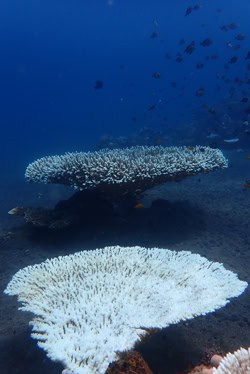
NOAA’s Coral Reef Watch is showing the predicted mass coral bleaching happening this year. Our Reef Check Malaysia teams at various locations are also actively monitoring for coral bleaching and have activated RCM’s Coral Bleaching Response Plan, having received a warning from NOAA.

We welcome the public to help us monitor the health of Malaysia’s coral reefs. If you’re in Malaysia and have seen any bleaching corals, you can report your observations to us at https://bit.ly/rcmbleachingreport  or by scanning the QR code. We can work together towards the preservation and recovery of our coral reefs.

Local Marine Conservation Groups Meet

A few weeks ago, RCM organized a trip for the members of the Redang Marine Conservation Group (RMCG). Led by our colleagues from Redang Island, they paid a visit to Tioman Island, to meet our RCM colleagues and the Tioman Marine Conservation Group (TMCG) team! 

The RMCG team spent four days on Tioman, learning and sharing experiences with the TMCG team on various marine conservation efforts and issues. They also had the opportunity to conduct marine biodiversity monitoring as well as visiting “Rumah Hijau” where all the recycling activities on the island are conducted. RCM has been working to send our colleagues on the ground from one location to another, in an effort to help them learn and understand each other’s work better and gain necessary insights that will help them serve their community better.

Briefing of RMCG members before a dive in Tioman
Visit to Rumah Hijau to learn the recycling process

Waste Management & Recycling Program

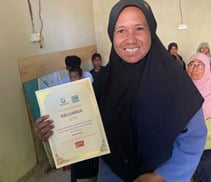
One of the households who received the certificate of excellence

Since its introduction about three years ago, the local islanders of Mantanani have been exposed to waste management and its benefits. Recently, our colleague on the island organized a community engagement session focusing on waste management, attended by close to 100 islanders. We discussed the challenges faced by the efforts, and also updated them regarding the current status and progress of the waste management program. We also took the opportunity to award 80 households with a “Certificate of Excellence” for their full participation and compliance with the program throughout 2023.

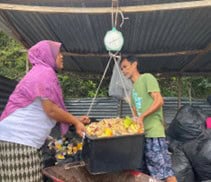
Waste management team weighing the food waste before composting

In an effort to extend the program, our local waste management team on Mantanani embarked on a trial to compost daily collected waste. On the first day, the team successfully processed more than 80 kg of food waste which will be composted. This extension was tested as a bid to reduce the amount of food waste that is collected by the local team every day. We hope that in the near future, composting will be a regular activity adopted by the local community. 

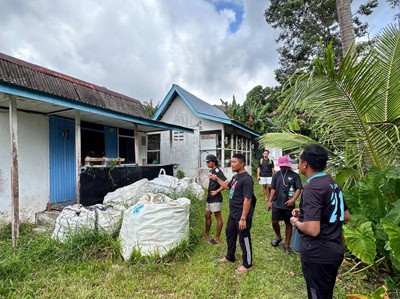
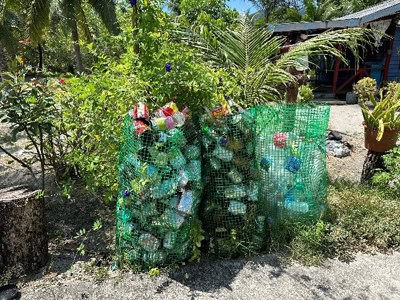
Meanwhile in the Mersing group of islands, the recycling program in Pulau Tinggi has successfully collected over 100 kg of recyclable materials, including plastic bottles, metal and aluminum tins, and glass bottles. Since its inception in August 2023, the program has received overwhelming support and participation from the island community members. Additionally, tourism operators on the island have expressed interest to collaborate in this initiative, further enhancing waste management efforts on the island. This year, we plan to extend the recycling program to Pulau Aur and Pemanggil. We hope that by sharing the outcomes and progress achieved through the recycling programs in Pulau Sibu and Pulau Tinggi with other island communities, the initiatives will also be accepted across the Mersing islands.

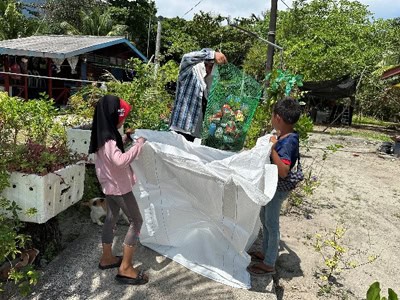
Island community working together to collect recyclables
Segregation of recyclable materials conducted by Pulau Tinggi community

Mooring Buoys Installation

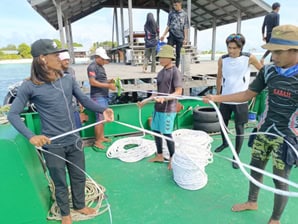
Preparation of the heavy duty rope used to connect the metal drums and mooring buoys in Semporna

Our colleagues in Semporna, together with representatives from Jeti Pelancong Semporna, the Semporna Professional Divers Association – SPDA, Semporna District Office, youth leaders from the Larapan Marine Conservation Groups, and Pulau Sipadan Resorts & Tours, deployed four mooring buoys in Timba-Timba Island. These sites are famous with tourists, who come over for snorkelling or diving. Recognizing the possible damage caused by anchor impact, the installation was done promptly to solve the problem and to promote the use of mooring buoys at other sites too. Each of the buoys are able to accommodate 3 to 5 boats at a time, as they are supported by sinkers made from metal drums filled with cement. 

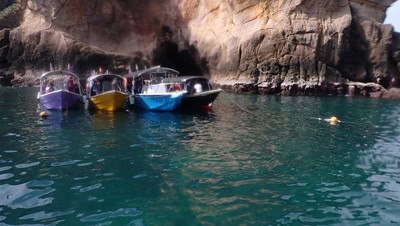
Boat operators in Mersing utilizing the newly installed mooring buoy

In the Mersing group of islands, we have successfully installed an additional eight mooring buoys at various snorkeling sites. This activity was conducted in collaboration with Mersing District Council, the local island community, and boat operators. The installation of mooring buoys offers a more environmentally friendly alternative compared to the usage of anchors which can be damaging to marine habitats such as coral reefs, seagrass beds and other underwater ecosystems. Additionally, the mooring buoys also help to facilitate safe boat operations and island-hopping activities around coral reef areas on the islands.